How the Great Migration actually moves
· 1 min read · Hardo
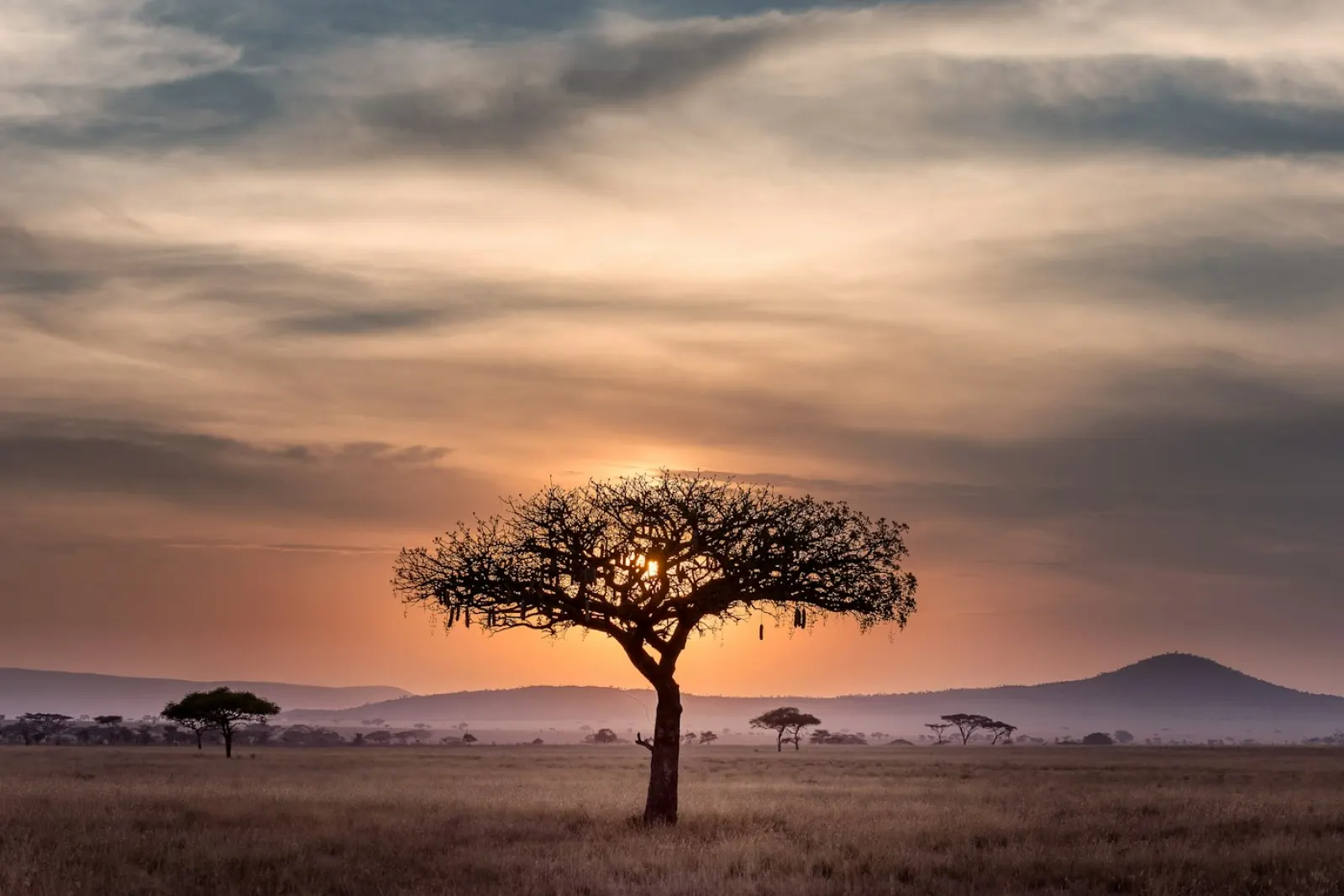
It is not a single river crossing in August. Two million animals move in a slow clockwise loop all year, and every month has something worth flying for.
The migration is sold as one event — wildebeest hurling themselves into the Mara River — and that is roughly three weeks of a twelve-month cycle.
December to March: the southern plains. The herds are on the short-grass plains around Ndutu, and in February around half a million calves are born inside about three weeks. Predator activity is the highest of the year. This is the best time for photography and the worst for the squeamish.
April and May: moving west. The long rains. The herds string out and start north-west. Fewer visitors, lower prices, and genuinely muddy roads.
June and July: the western corridor. The Grumeti River crossings, which are smaller than the Mara ones and much less crowded.
August to October: the Mara River. The crossings everybody has seen on television. Worth understanding: the herds may cross, refuse, cross back, and refuse again over several days. You are buying a chance, not a guarantee, and anyone who tells you otherwise is selling something.
November: back south. The short rains pull the herds down again, and the loop restarts.
We time departures against the herds rather than the school calendar, which is why our dates move a little each year.